Protein is protein, right? While there are many forms, not all protein is of the same quality and may not offer the same nutritional or health benefits.
Our bodies need protein to grow and develop, helping to rebuild cells and boost our immune systems. Protein has also been shown to aid in weight loss, boost metabolism and even lower the risks of stroke and heart disease.
But do all protein sources contribute these benefits? Not necessarily. One of the best ways to determine protein quality and how beneficial it is to the body is by assessing how much of a protein source can actually be broken down and absorbed into the body.
There are generally two methods for determining the quality of proteins. Let’s take a look at them, along with comparisons of common protein sources.
Digestibility Scores: PDCAAS vs. DIAAS
The benefits of protein are well documented, but measuring the quality of various types of protein hasn’t always been cut-and-dried within the scientific community. The newer Digestible Indispensable Amino Acid Score (DIAAS) method has largely replaced the Protein Digestibility Corrected Amino Acid Score (PDCAAS) in the last decade.
What’s the difference?
PDCAAS
PDCAAS was established as the industry standard in 1993, measuring protein quality by comparing a food’s essential amino acids to the needs of a child (ages 2–5). The highest PDCAAS score is 1.0, indicating complete amino acid provision. Dairy proteins like whey and casein can achieve this high score, whereas many plant-based proteins like beans and nuts typically score significantly lower.
DIAAS
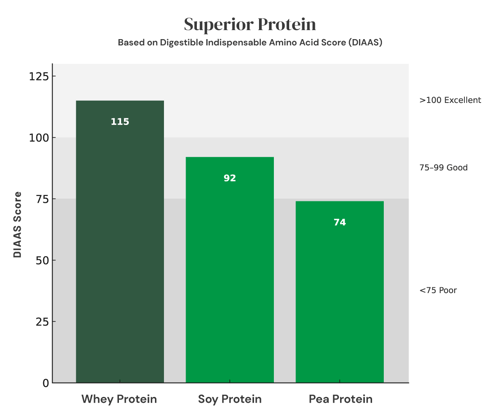
DIAAS measures protein quality by comparing a food’s digestible amino acids to age-specific requirements. The lowest amino acid value is converted into a percentage-based DIAAS rating:
- Below 75% lacks a quality claim
- 75-99% indicates good protein quality
- 100% or higher represents excellent protein quality (values sometimes exceed 100%)
Once again, dairy proteins like whey score the highest using the DIAAS ranking, considered “excellent.” Whey protein contains all the essential amino acids the body needs. Interestingly, soy scores similarly to whey protein (1.0) using the PDCAAS method, but falls below the “excellent” threshold using the DIAAS method. Pea protein scores in the “poor” category.
Why the difference? It comes down to better scoring methods and other beneficial factors.
The Benefits of DIAAS Protein Quality Scoring
Many experts prefer the DIAAS method over PDCAAS because of several key advantages:
- More precise scoring. PDCAAS is capped at 1.0, meaning all top-quality proteins appear equal, even when they differ in their actual nutritional value. DIAAS can exceed 100%, offering a more detailed assessment. For example, while whey protein isolate and soy protein isolate have nearly identical PDCAAS scores (1.0 vs. 0.98), their DIAAS scores show a much clearer distinction in quality. Whey protein isolate typically achieves a DIAAS of 110% or more whereas soy averages between 75–90%
- More accurate sampling. PDCAAS relies on fecal samples from test animals, while DIAAS measures amino acid absorption from the ileum (the last portion of the small intestine), a more precise indicator of human digestion
- Broader applicability. Originally developed for infant nutrition, PDCAAS is limited in scope. DIAAS, however, applies across all age groups and dietary needs, making it more versatile for assessing protein quality
Because PDCAAS can sometimes overstate the quality of lower-ranked proteins, understanding these differences is important for consumers and food developers who want to ensure optimal nutrition in their formulations
Beyond Nutrition: Taste, Texture & Functionality
While consumers continue to shop for foods to support their healthy lifestyles, they’re not willing to compromise on taste or texture. While some protein sources may inch toward the high scores that whey protein can boast, most fall short elsewhere.
Many alternative protein sources lack flavor or introduce off flavors that require masking agents, going against many clean-label initiatives. Others result in gritty or gummy textures that require texture enhancers.
Even among whey protein producers, however, there can be significant differences. Grande Custom Ingredients Group offers several sustainably sourced whey ingredients that provide the highest quality nutrition while also delivering clean flavors and ideal textures.
Grande Ultra® Whey Protein Isolate
Whey protein isolate (WPI) is the gold standard of nutrition, boasting 90% protein.
Applications: Clear RTD sports beverages and drink powders
- Clean, neutral flavor
- Dissolves easily
- Helps maintain clarity and reduce turbidity
Grande WPCrisp® Whey Protein Crisps
Whey protein crisps are high in protein (60-70%) and are used in applications where a crunchy texture is desired.
Applications: Protein bars, cereals, snacks, etc.
- Crispy texture
- Clean, neutral taste — available in cocoa flavor
Grande Primo™ Greek Dried Yogurt
Powdered Greek yogurt offers up to 60% protein level.
Applications: Coatings, dips, dressings, smoothies, frozen desserts
- Signature yogurt flavor
- Creamy, indulgent texture
RELATED: Types of Whey Protein Ingredients
Understanding protein quality is essential for creating nutritious, functional and great-tasting food products. DIAAS has proven to be a more precise measure of protein digestibility than PDCAAS, reinforcing whey protein’s superiority. When you also add in the great taste, texture and functionality of Grande’s proprietary whey ingredients, you have a winning combination.
Let’s work together to optimize your product’s protein content and performance—contact us today to discuss your formulation challenge.