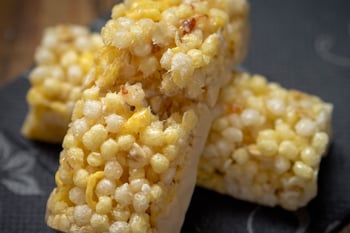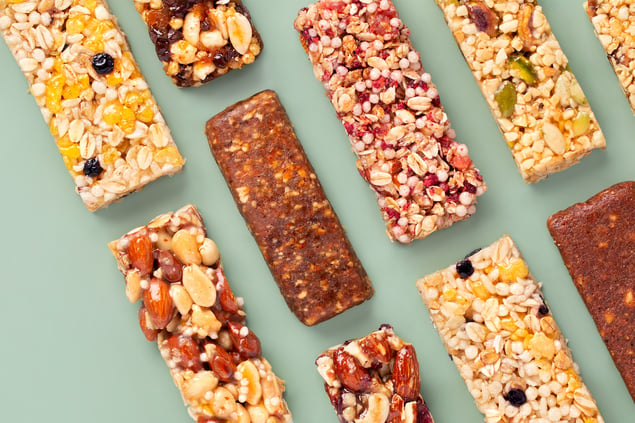
Picture two protein crisps sitting side by side. Same protein percentage. Same application. One delivers a satisfying crunch from the first bite to the last day of shelf life. The other doesn’t make it past the first sensory panel. The difference isn’t in the nutrition facts. It’s in the specs you wouldn’t think to check.
And those specs matter more than ever. Research shows protein is among the top ingredients that consumers look for on labels and package claims.1 Likewise, when food scientists evaluate protein crisps for bars, cereal, clusters or snack formulations, protein percentage is critically important to meet nutritional targets.
Protein concentration tells only part of the story. A crisp that delivers the desired protein level may still fall short if it compromises the product’s texture, contributes an undesirable flavor or doesn’t maintain its crunch throughout shelf life.
Often, the specs that never make it onto the nutrition label are what determine whether your product actually works in the real world.
Understanding these characteristics can help food scientists and product developers select a whey protein crisp that supports both nutritional goals and product quality. In this article, we’ll explore the specifications that matter beyond protein percentage and what to consider when comparing ingredients for your application.
How Can Protein Crisps Help Improve High-Protein Formulations?
Whey protein crisps offer an alternative to protein powders that can cause hardening or chalky texture in bars, contributing a light, distinct crunch while still supporting protein targets.
But the results depend on the crisp itself and how it performs in the finished product. That’s where specifications beyond protein percentage come in.
RELATED ARTICLE:
Reasons to Use Whey Protein Crisps in Formulations
How Does Protein Crisp Texture Affect the Eating Experience?
In cereals, snack mixes and clusters, protein crisps can contribute to the crispy texture consumers expect.
But not all protein crisps deliver the same eating experience. Some may be hard and dense, while others break down too quickly. Ideally, a crisp should provide a noticeable crunch through several bites rather than disintegrating immediately.
Several factors can influence that texture:
- Protein and starch levels: Whey protein crisps typically contain both whey protein and starch. Increasing the proportion of protein while reducing starch can change the crisp’s texture, making it important to balance protein targets with the desired eating experience.
- Bulk density: Bulk density describes how much a given volume of crisps weighs. It can provide insight into how light or dense a crisp is, although it should be considered alongside other characteristics when evaluating texture.
- Crisp structure: The particle size, shape and internal structure of a crisp can influence how it feels and breaks apart when eaten. It also influences appearance.
- The finished formulation: A crisp should be evaluated on its own and in the finished product. Other ingredients and processing conditions can influence texture. Finding the right inclusion level can help deliver the desired balance of protein and crunch. Grande’s R&D team can help you determine the right amount of crisp for your application.
- Layered systems: If WPCrisp is used alongside other functional whey ingredients like WPI or yogurt coatings, consider how moisture from surrounding components may affect crispness and inclusion level. See how WPCrisp performs in a layered bar system.
Grande WPCrisp® provides a light, crispy texture while adding protein to bars, snacks and cereals. It is available in 60% and 70% protein options, giving formulators flexibility to balance their nutritional and texture goals.
RELATED ARTICLE:
How Are Whey Protein Crisps Made?
How Does Protein Crisp Flavor Affect a Formulation?
The flavor of your protein crisp can work with your formulation or against it. Choose the wrong crisp and you may spend more time masking the protein than developing the flavor you actually want.
Some plant-based protein crisps contribute earthy or bitter notes that linger in the finished product. If you’re working with a plant-based crisp, you may find yourself adding masking agents, sweeteners or stronger flavorants to offset those undesirable flavors.
A whey protein crisp with a clean, neutral flavor provides a more versatile canvas. Rather than working around the flavor of the protein ingredient, formulators have more freedom to develop a range of combinations, from vanilla and fruit to chocolate, peanut butter or savory seasonings.
Grande WPCrisp® has a clean, neutral flavor that complements other ingredients in applications ranging from nutrition bars and cereals to snack mixes and clusters.
A Shift in Consumer Perceptions
A 2025 Hanover Research study shows that consumers see whey protein as superior to plant-based alternatives across multiple attributes:2
-
Satiety: 47% say whey keeps them full longer (vs. 15% for plant proteins)
-
Taste: 43% prefer whey’s flavor (vs. 20% for plant-based)
-
Mouthfeel: 41% say whey offers better texture (vs. 22% for plant-based)
-
Completeness: 33% believe whey is higher quality (vs. 23% for plant-based)
How Well Do Protein Crisps Maintain Their Crunch Over Shelf Life?
A crisp that performs well on your bench is only half the story. The real test is whether it still delivers that crunch when your product reaches the consumer. Will it deliver a satisfying texture throughout a product’s intended shelf life?
If protein crisps become soft, soggy or stale before the expiration date, consumers notice, even if your product technically passed shelf life testing.
Grande has partnered with several leading protein bar formulators who say our whey protein crisps maintain their crunch over time. On the contrary, while working with a leading protein bar manufacturer, we have been told that other types of protein crisps do not hold up as well in their bar applications.
What Can Affect a Protein Crisp’s Shelf-Life Performance?
A crisp’s ability to maintain its texture depends on more than the ingredient itself. Factors include:
- The formulation: Moisture can move between ingredients over time, potentially softening the crisp.
- Processing: The way a product is mixed or formed can affect the crisp’s structure.
- Coatings: The type of coating—such as a layered compound yogurt coating—and how it interacts with the crisp can influence whether the crisp maintains its crunch over time.
- Packaging: Packaging can help limit exposure to moisture from the surrounding environment.
- Storage conditions: Temperature and humidity can affect how the finished product holds up—shelf-stable bars perform differently than refrigerated bars.
- Crisp composition and structure: The ingredients and internal structure of a crisp may influence how it responds to moisture and maintains its texture over time.
How Can Manufacturers Evaluate Protein Crisp Shelf Life?
To help determine whether a protein crisp delivers the eating experience consumers expect from the first bite to the last:
- Test the crisp in the finished product, using the intended packaging and storage conditions.
- Assess the product at the beginning and at intervals throughout its intended shelf life.
- Pay attention to whether the crisp maintains its crunch, becomes softer or develops a poor texture.
Protein Crisp Evaluation Metrics
When you’re comparing protein crisps, here are the specs worth evaluating and the questions worth asking:
| What to evaluate | Questions to ask yourself |
|---|---|
| Protein percentage | Does it help meet the finished product’s nutritional target? |
| Bulk density and piece size | How does the crisp fit the application and contribute to texture? |
| Flavor and aftertaste | Does it complement the product’s intended flavor or introduce off notes? |
| Shelf-life performance | Does it maintain the desired texture over time? |
| Performance in the finished product | How do formulation, processing and packaging affect the crisp? |
When comparing protein crisps, review the supplier’s product specifications and Certificate of Analysis (COA) for applicable quality characteristics. Then evaluate the crisp in your finished formulation to see how it performs under your processing, packaging and storage conditions.
Find the Right Protein Crisp for Your Formulation
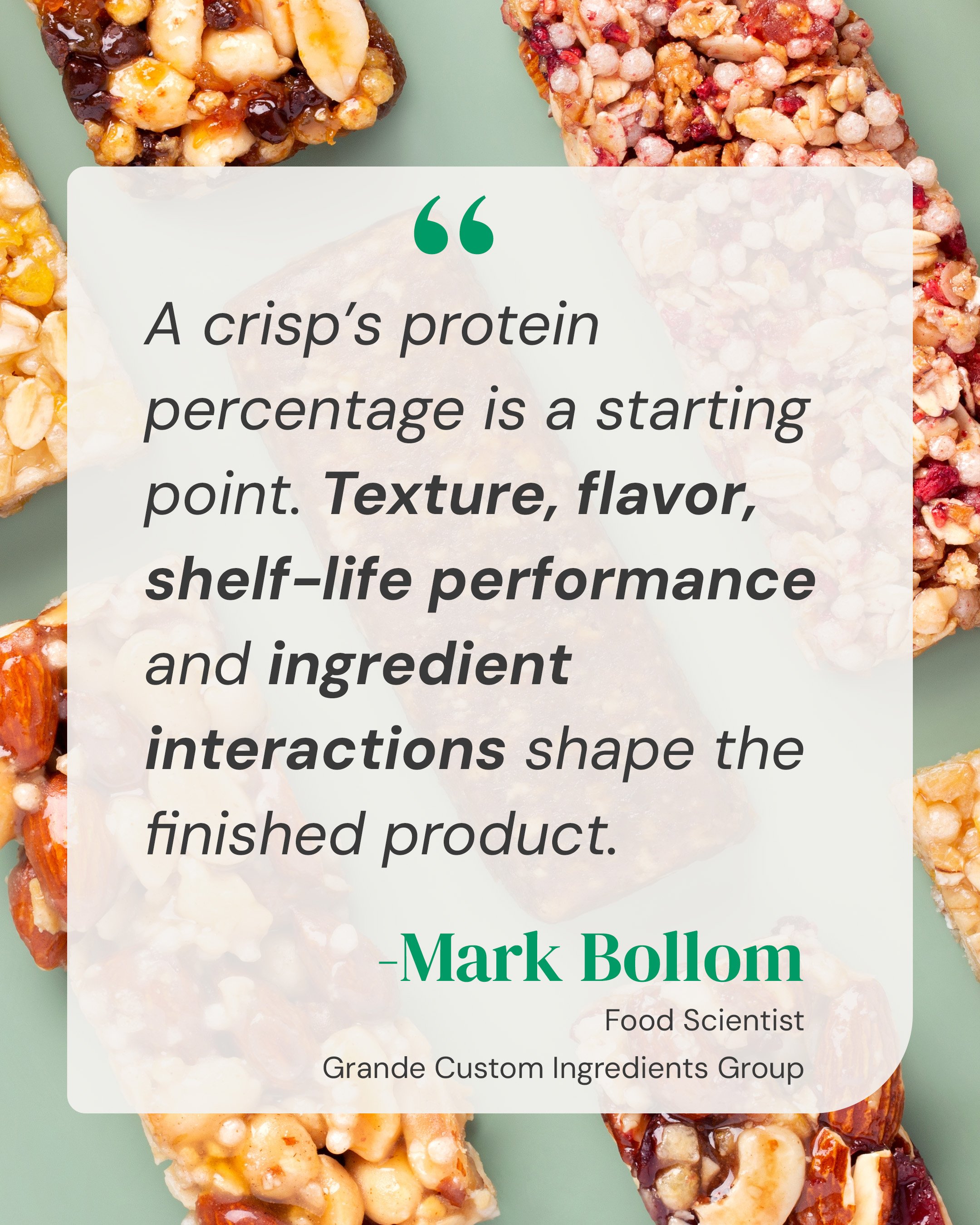
Protein percentage is an important starting point, but it doesn’t tell you how a crisp will perform in your finished product. Texture, flavor, shelf-life performance and interactions with other ingredients all contribute to the result.
The best protein crisp for your application is one that helps you hit your protein targets while delivering the eating experience consumers expect.
Grande WPCrisp® offers options to support different formulation needs:
- Protein levels: 60% and 70% protein options
- Appearance: A cocoa option for chocolate-inspired applications
- Starch source: Corn starch and tapioca starch options
Need help finding the right fit? Grande’s R&D team can help you evaluate whey protein crisp options and determine an inclusion level that supports your formulation goals. Connect with our team to get started.
Get the latest formulation news delivered to your inbox! Subscribe to Ingredient Insights by Grande Custom Ingredients today.
Sources:
1 Hanover Research, 2026 Protein Ingredients Value Study (2026)
2 Hanover Research, Protein Preferences & Perception Study (2025)

AUTHOR
Mark Bollom
Mark Bollom, Food Scientist, works in research and development at Grande Cheese Company’s Custom Ingredients Group, with a focus on developing value-added whey-derived ingredients. He engages in cross-functional collaboration with internal and external stakeholders, and leverages core technologies including membrane filtration, extrusion, fermentation and analytical testing. He holds a BS and MS in Food Science.